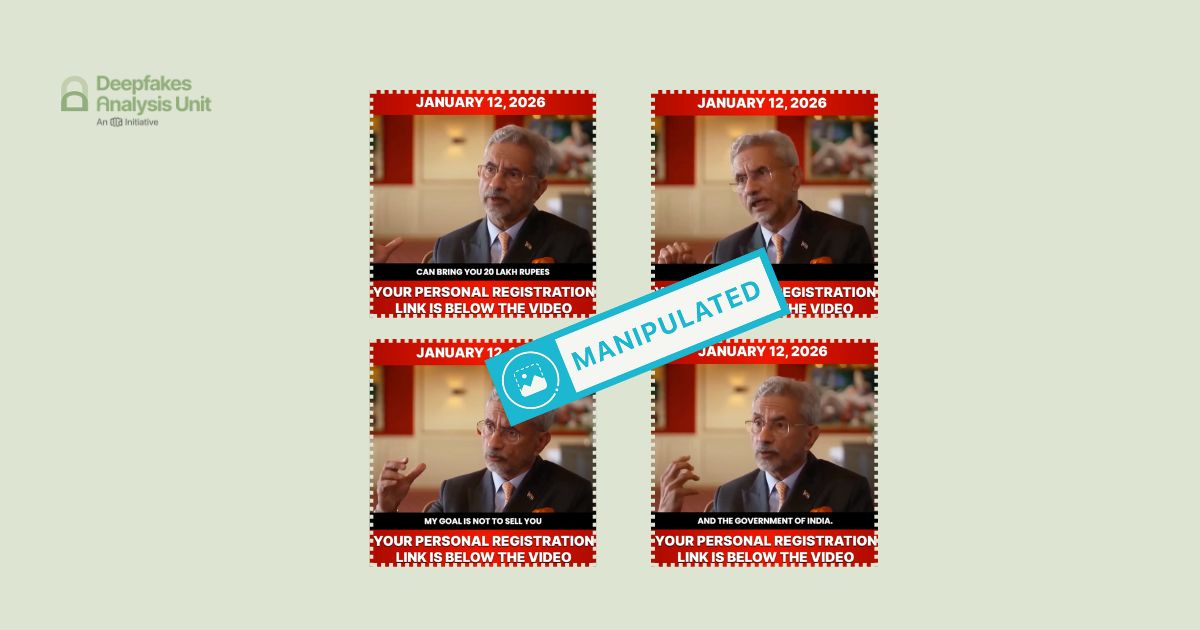


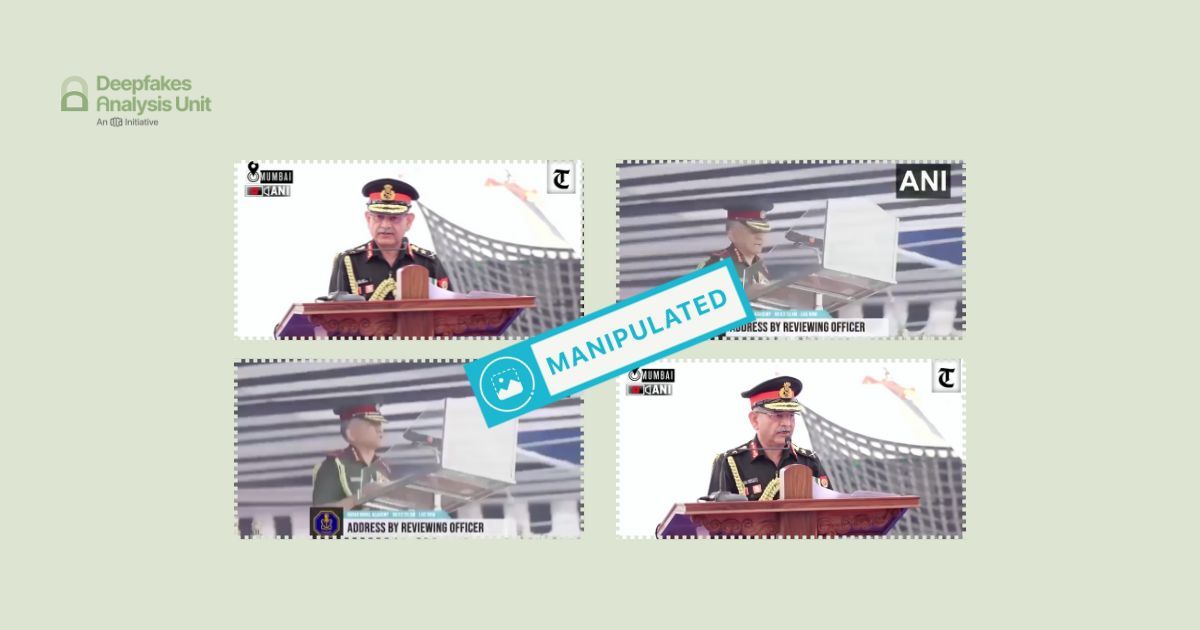
The Deepfakes Analysis Unit (DAU) analysed two videos, one of them apparently featuring Gen. Anil Chauhan, India’s Chief of Defence Staff, and the other one supposedly featuring Gen. Upendra Dwivedi, India’s Chief of Army Staff. Both videos have one thing in common— the featured subjects seem to imply that India has ceded Arunachal Pradesh state to China with one purported speaker also suggesting Ladakh’s surrender. After putting the videos through A.I. detection tools and getting our expert partners to weigh in, we were able to conclude that the videos were manipulated with synthetic audio.
Each video is in English. General Chauhan’s purported video spans 26 seconds and General Dwivedi’s purported video is 54 seconds long. The links to the videos—embedded in posts on X and Facebook— were escalated to the DAU by fact-checking partners for analysis.
The Facebook link to Gen. Chauhan’s supposed video is not accessible anymore. However, we were able to record some details while the link was working. The post that embedded the video carried text in Hindi stating that, “The BJP has sold Ladakh and Arunachal Pradesh to China” and that the “Indian government surrendered” the states because of its “weak air force” and that the general “has exposed the Modi government's hypocrisy.”
Gen. Dwivedi’s purported video was posted on X on Nov. 26 by an account with the display name: “Ahmed Wazir”. The post with the video carried text in English, which read: “India’s Chief of Army Staff General Upendra Dwivedi comes with an out of the box solution to fight Pakistan Army (sic). He has proposed giving Arunachal to China in order to appease China to stop supporting Pakistan.”
We do not have any evidence to suggest whether the videos originated from any of the accounts on Facebook, X, or elsewhere.
The fact-checking unit of the Press Information Bureau (PIB), which debunks misinformation related to the Indian government, posted fact-checks for the two videos— here and here— from their verified handle on X.
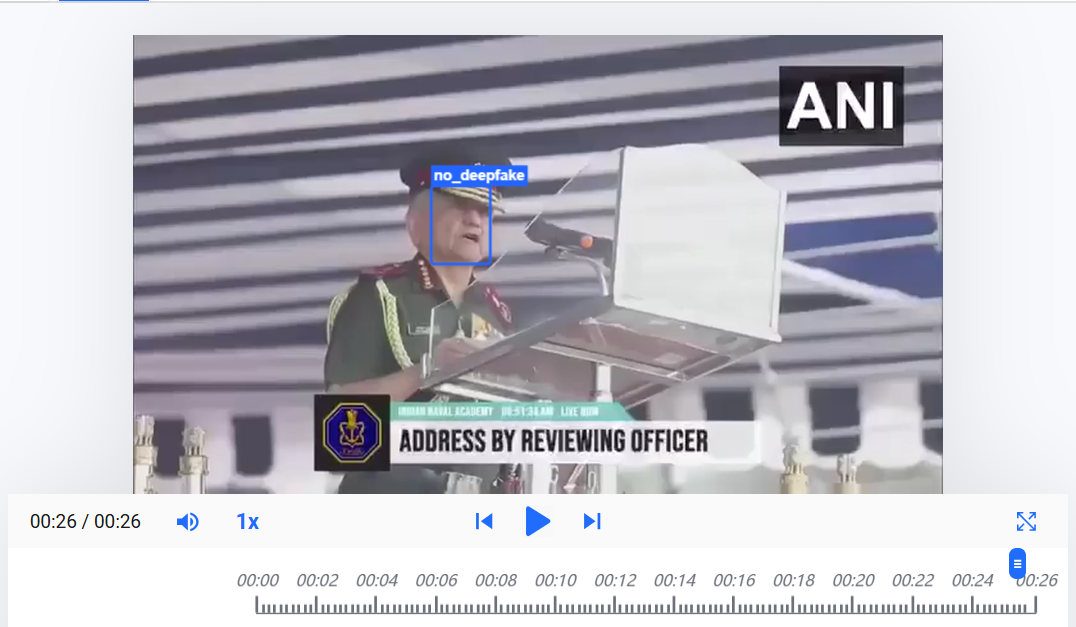
Gen. Chauhan has been captured in a medium close-up in an outdoor setting in the purported video. He appears to be speaking into a microphone standing behind a lectern with a plastic or glass shield. His head and gaze keep shifting up and down giving the impression that he is reading from something and addressing a gathering. The video also features cutaways of the audience, which includes uniformed defence officers as well as people in plain clothing.
A logo resembling that of ANI, an Indian news agency, can be seen in the top-right corner of the video frame. Bold black text set against a white background visible at the bottom of the frame reads: “address by reviewing officer”. A set of blurry graphics above it in smaller font in white set against a light greenish background read: “Indian Naval academy” and “Live now” with an apparent live timer displayed in between. This arrangement of graphics is bordered to the left by a distorted logo of the Indian Navy set against a black background.
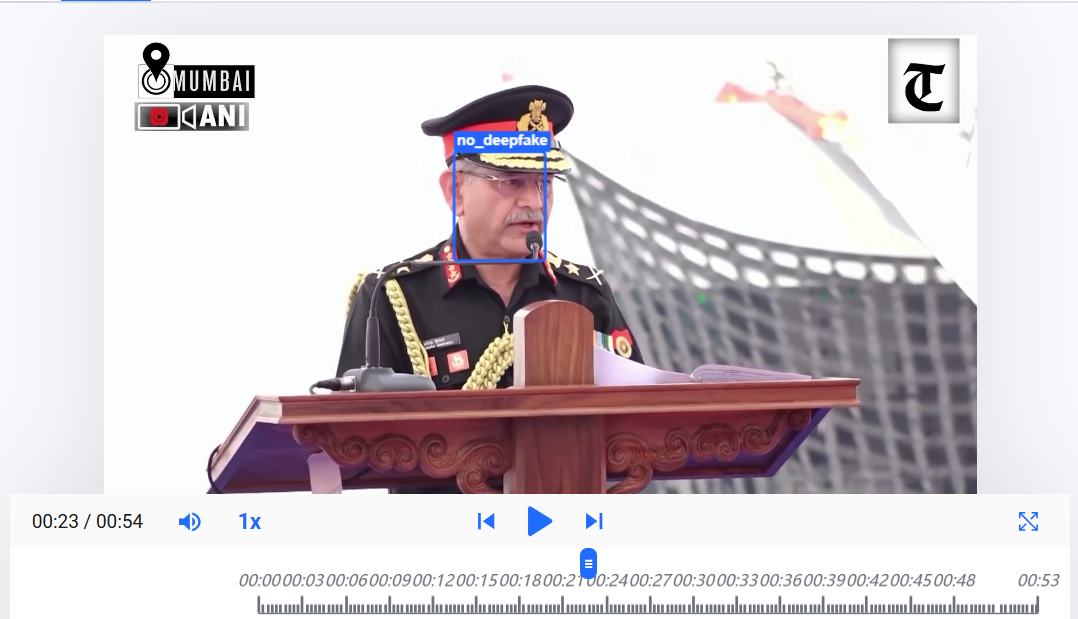
In the purported video of Gen. Dwivedi, he too has been captured in a medium close-up and an outdoor setting standing behind a wooden lectern speaking into a microphone. He seems to be reading from some papers; his head and gaze shift from the papers to different directions at frequent intervals, seemingly addressing an audience.
A logo resembling that of The Tribune, an Indian English-language daily, appears in the top-right corner of the video frame. In the top-left corner, a text graphic indicating the location as “Mumbai” is visible, and below that an arrangement of letters “ANI” resembling the ANI logo can be seen.
The overall quality of the video purportedly featuring Gen. Chauhan is very poor, it’s difficult to gauge the lip-sync perfectly; however in some frames the lip movements appear fast, in others they seem to be in sync with the audio. Gen. Dwivedi’s purported video quality is good and so is the synchronisation between the lip movements and the corresponding audio track, however, the lip movements seem somewhat fast.
Gen. Chauhan’s mouth area is blurred, but despite that when his mouth opens and closes as he appears to speak his teeth seem to disappear between frames. In Gen. Dwivedi’s case his teeth seem to lose definition and appear as white patches in some frames.
The insignia on Gen. Chauhan’s uniform is blurred and hazy. The detailing on the insignia on Gen. Dwivedi’s uniform isn’t sharp; the Indian national emblem on his cap looks distorted.
All the visual oddities highlighted above point to signs of possible digital manipulation in the videos.
We compared the voices attributed to the generals in the videos with their recorded speeches and interviews available online. There is similarity in the voice, tone, pitch as well as the pauses in both sets of voices. However, the pitch and the delivery is sharper and vigorous for both the generals in their respective real voice samples found online.
An echo can be heard in both the videos along with a subtle static noise though there is no ambient sound in either video despite the apparent setting of the videos being outdoors.
We undertook a reverse image search using screenshots from the two videos. Gen. Chauhan’s visuals were traced to this video published from the official YouTube channel of the Indian Navy on Nov. 29, 2025; and Gen. Dwivedi’s visuals were traced to this video published on Nov. 24, 2025 from the official YouTube channel of The Tribune.
The clothing, backdrop, and body language of Gen. Chauhan and Gen. Dwivedi are identical in the videos we traced and the ones we reviewed. However, the audio tracks do not match though the language is English in both sets of videos with some bits of Hindi in the video of Gen. Chauhan that we traced. The Indian Army insignia on the uniform of the generals is clearly discernible and properly represented in the videos we traced.
The Indian Navy crest is visible in the bottom-right corner of the frame in the source video featuring Gen. Chauhan; the crest is absent from the doctored video. A logo similar to the ANI logo, seen in the manipulated video, is not part of the source video. The other text graphics and audience cutaways are part of the source video as well.
In the source video for Gen. Dwivedi’s clip the logos of The Tribune are visible in the top-right corner of the video frame, alternating between those representing their English, Hindi, and Punjabi publications. Each time the logos switch there is a flash of blue that appears in place of the white background against which the logos are set. The changing logos are not part of the doctored video, which only carries a static logo representing their English publication.
The top-left corner of the video frame also carries the location graphics and the ANI logo— the exact same arrangement of graphics is visible in the doctored video, which does not feature any of the other subjects seen in the source video.
The echo heard in the manipulated videos is not part of the source videos, which have some static noise but no ambient sound.
Short video clips from the source video featuring Gen. Chauhan seem to have been lifted and stitched together to create the manipulated version. The manipulated video of Gen. Dwivedi looks seamless without any visible jump cuts or transitions, however, the clips in the source video which are identical to the doctored clip are shorter in duration.
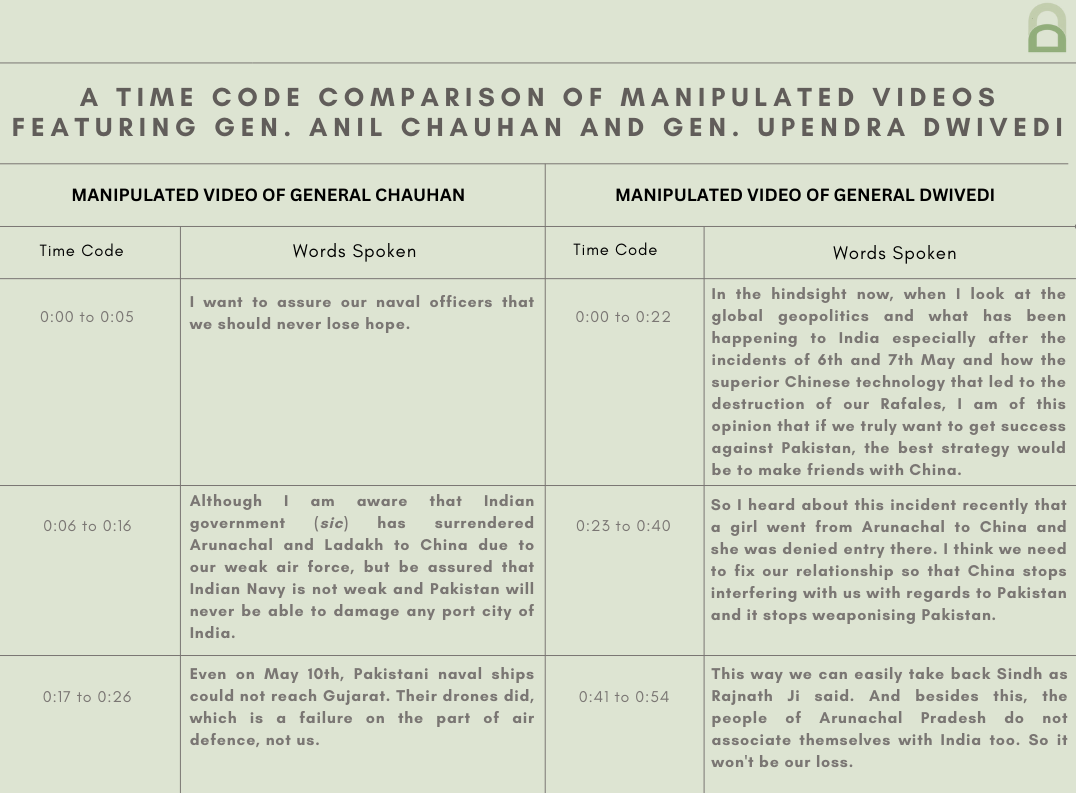
Shared below is a table that compares the transcripts of the audio tracks from the doctored videos. We want to give our readers a sense of how the audio tracks are being used to peddle a certain narrative. We, of course, do not intend to give any oxygen to the bad actors behind this content.
To discern the extent of A.I. manipulation in the videos we reviewed, we put them through A.I. detection tools.
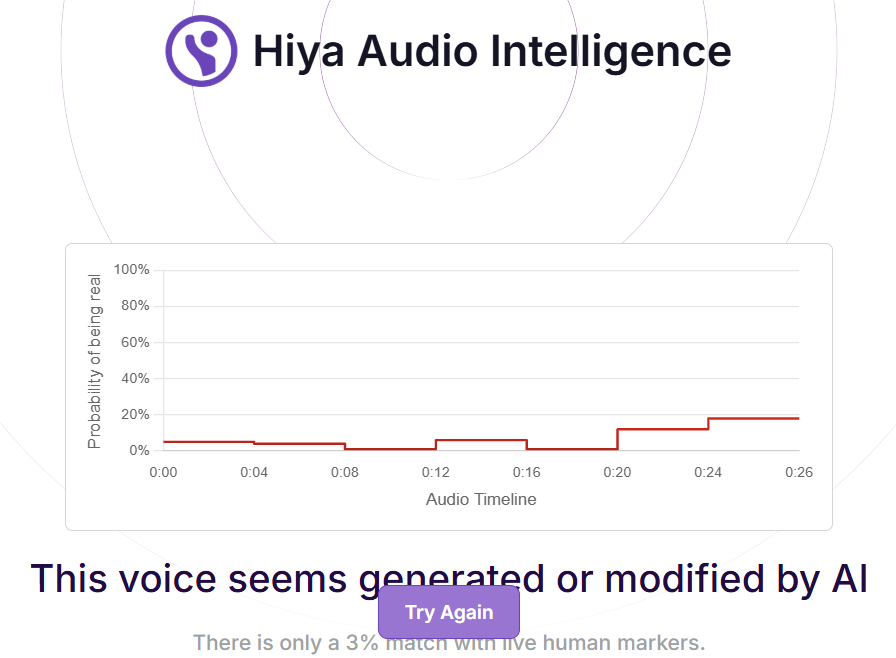
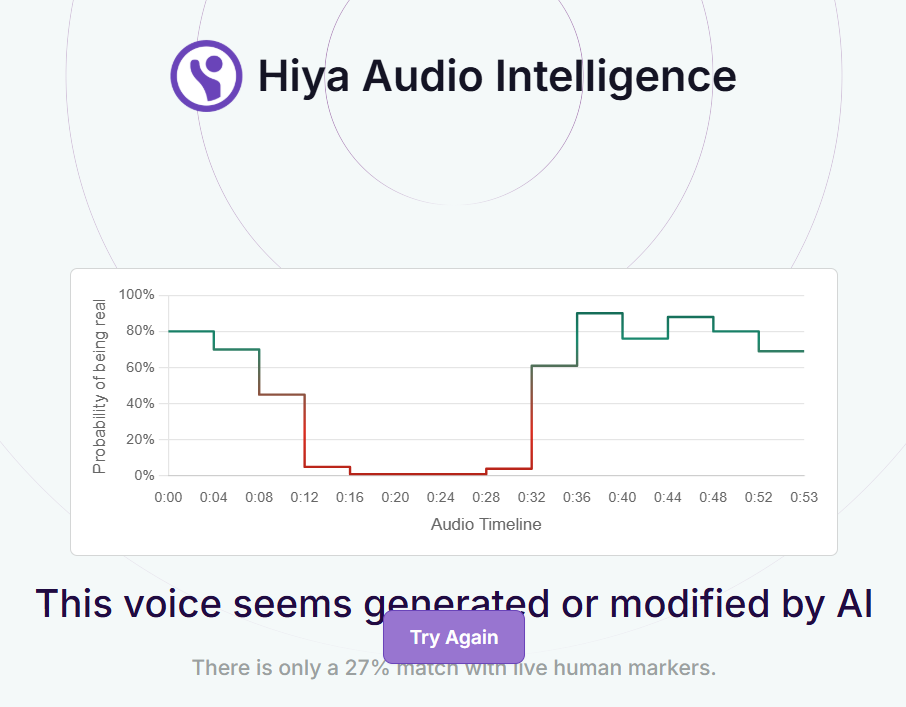
The voice tool of Hiya, a company that specialises in artificial intelligence solutions for voice safety, indicated that there is a 97 percent probability that the audio tracks in both the manipulated videos were modified or generated using A.I.
Hive AI’s deepfake video detection tool as well as their audio detection tool did not find any markers of A.I. in the video or audio tracks of the two manipulated videos.
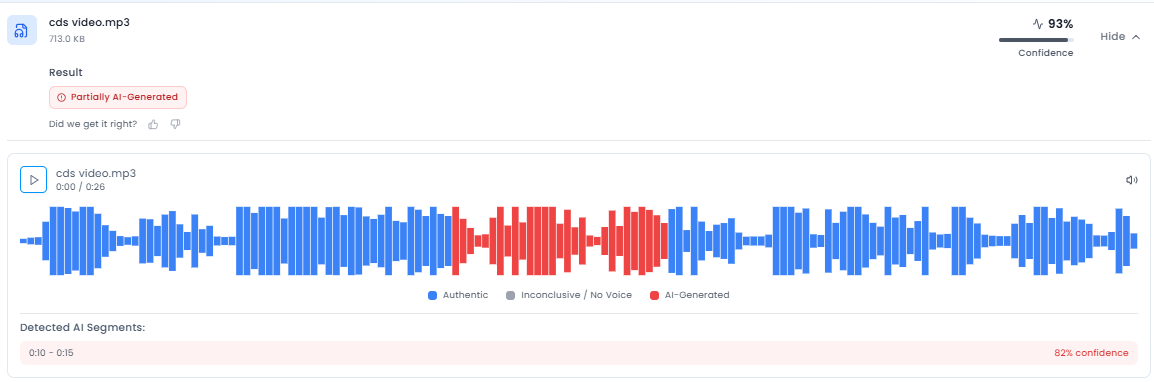
We ran the audio tracks through the advanced audio deepfake detection engine of Aurigin.ai, a Swiss deeptech company. The results indicated 93 percent confidence in the purported audio of Gen. Chauhan being partially A.I.-generated. The purported audio of Gen. Dwivedi was categorised as authentic by the tool with 99 percent confidence.

We also put the audio tracks through the A.I. speech classifier of ElevenLabs, a company specialising in voice A.I. research and deployment. The results that returned indicated that it was “unlikely” that the audio track in Gen. Chauhan’s doctored video was generated using their platform and it was “very unlikely” that the purported audio track of Gen. Dwivedi was generated from their platform. A further analysis by the team also could not conclusively determine whether the audio tracks were synthetic or not.
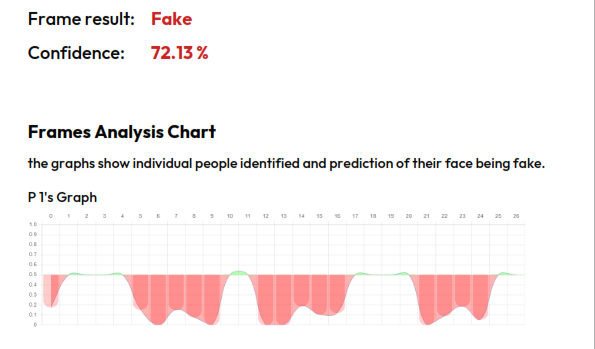
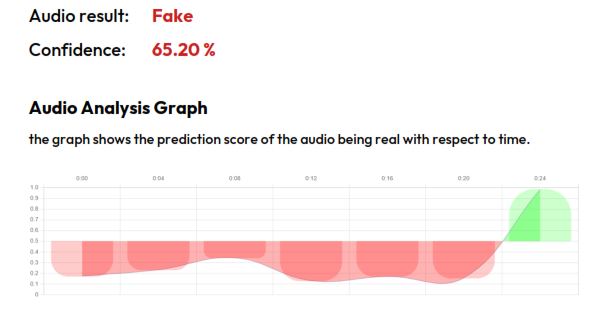
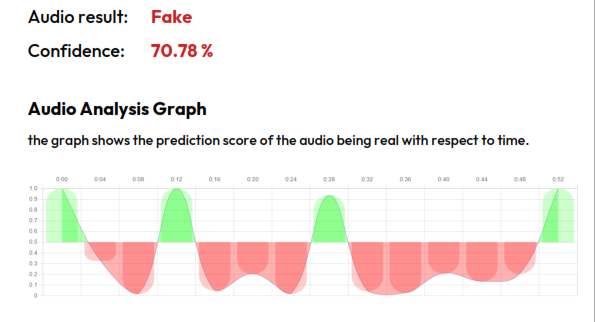
To get an analysis on the videos we reached out to ConTrails AI, a Bangalore-based startup with its own A.I. tools for detection of audio and video spoofs. The team ran the videos through audio and video detection models. The results that returned indicated signs of A.I.-manipulation in the video tracks and A.I.-generation in the audio tracks.
They stated that in Gen. Chauhan’s purported video a lip-sync method was used to synchronise the lip movements of the speaker with the audio. Though they added that because of the low resolution of the video they were unable to give a strong prediction.
They also noted that a voice cloning technique was used to create the audio track to match the actual voice of the general. As per their analysis a unique echo chamber effect was added to the background of the audio track and that impacted the confidence score.
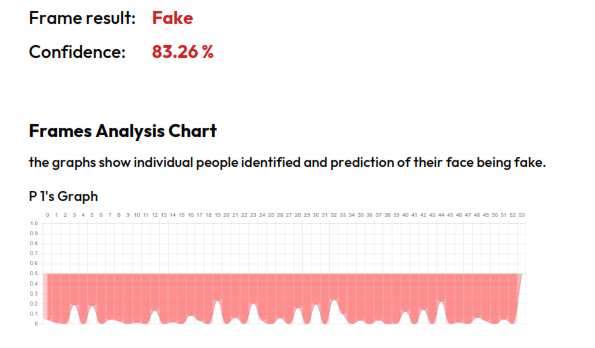
The Contrails team stated that in Gen. Dwivedi’s purported video lip-sync or lip-reanimation technique was used to synchronise the mouth area movements of the speaker with the generated audio.
They further noted that a voice cloning technique was used to create the audio clip, which matches the actual voice of the general but is monotonous and clean, indicating A.I.-generation.
To get more expert analysis on Gen. Chauhan’s doctored video we reached out to our partners at RIT’s DeFake Project. Kelly Wu from the project pointed to the same source video that we have shared above. Ms. Wu noted that the low resolution of the video makes it difficult to clearly see the general’s facial features.
Wu was, however, able to highlight a specific moment at the beginning of the video where the general’s mouth area tends to be clearer and the mismatch between his lip movements and the audio track is more evident. In that instance his mouth appears closed even as the words heard in the audio begin with an “I”; if he had actually been saying those words his mouth would have been open wider.
Saniat Sohrawardi from the project added that this video is similar to the fakes that use the lip-sync type of deepfake techniques. It is likely that the video has used wav2lip technology —a speech-to-lip generation code repository available online— for the video generation with terrible frame rate and video quality.
Mr. Sohrawardi added that some artefacts in the video could be due to heavy compression and terrible frame rate and that the five second segment toward the end of the video has a fairly clear range of artefacts around the general’s mouth. Speeding up of the mouth beyond the frame rate of the video track and it not being in sync with the speech are some specifics that Sohrawardi mentioned.
To get another expert to weigh in on the video featuring Gen. Dwivedi, we escalated it to the Global Online Deepfake Detection System (GODDS), a detection system set up by Northwestern University’s Security & AI Lab (NSAIL). The video was analysed by two human analysts, run through 21 deepfake detection algorithms for video analysis, and 70 deepfake detection algorithms for audio analysis.
Of the 21 predictive models, four gave a higher probability of the video being fake and the remaining 17 gave a lower probability of the video being fake. Of the 70 predictive models, five gave a higher probability of the audio being fake, while the remaining 65 gave a lower probability of the audio being fake.
In their report, the team pointed to specific time codes throughout the video where the subject’s glasses seem to blend into his face. They mention that his moustache seems to unnaturally overlap into the microphone at various moments in the video. They also pointed to the yellowish ornamentation on the subject’s hat being blurry despite most of the surrounding details on it remaining clear.
The team identified a particular time code where a dot suddenly appears on the subject’s nose from no observable point of origin. They also highlighted another time code where the subject’s teeth and lips overlap, appearing almost as a “visual overlay”. They further observed that the details in the subject’s backdrop are not clearly visible because of the overexposure, potentially hiding visible media manipulations.
They corroborated our observation about the subject’s purported voice lacking natural tonal and cadence variations that are characteristic of human voices. In conclusion, the team stated that the video is likely manipulated via artificial intelligence.
On the basis of our observations and expert analyses, we can conclude that in each video original footage was used with synthetic audio to peddle a false narrative about India ceding territory to China.
(Written by Debopriya Bhattacharya and Debraj Sarkar, edited by Pamposh Raina.)
(Kindly Note: The manipulated audio/video files that we receive on our tipline are not embedded in our assessment reports because we do not intend to contribute to their virality.)
You can read the fact-checks related to this piece published by our partners:
Fact Check: Give Arunachal to China, suggests Army Chief Gen. Dwivedi? No, video is AI-manipulated
CDS चौहान ने नहीं कहा कि भारत ने अरुणाचल और लद्दाख चीन को सौंपा
No, CDS Chauhan Did Not Say Government Ceded Arunachal, Ladakh To China
No, COAS Upendra Dwivedi Did Not Propose “Giving Arunachal to China”
No, COAS General Dwivedi Did Not Say Arunachal Should Be Given to China


.png)